Technology

The Technology pillar translates modelling, materials, and biological insights into functional stimulation systems, combining hardware and software into integrated experimental and pre-industrial platforms.

Why it matters for industry

The main objective is to translate research outputs into functional, integrated stimulation systems ready for experimental and pre-industrial deployment.

Accelerates prototyping and system integration

Reduces the gap between laboratory research and application

Enables customization aligned with real-world constraints

Stimulation Devices & Hardware

The project develops and integrates:

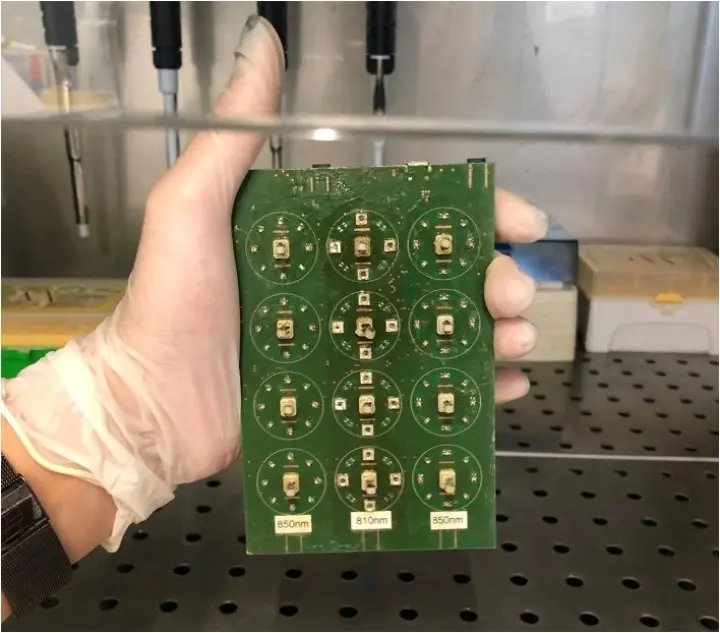
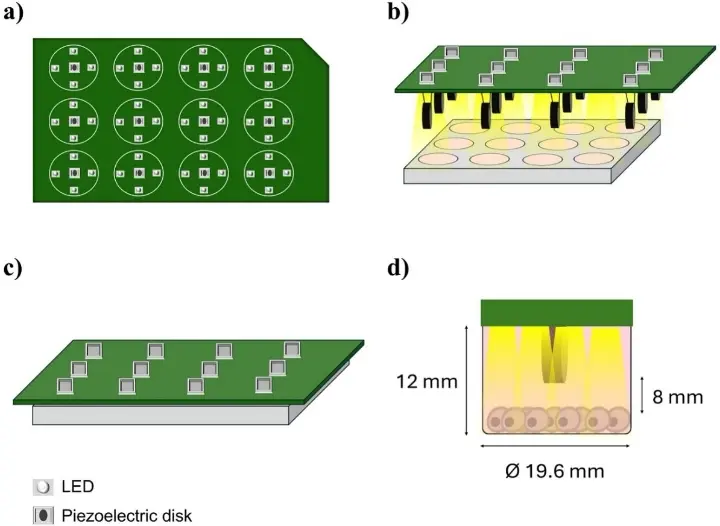
• Acoustic and vibroacoustic stimulators;
• Ultrasound transducers optimized through modelling;
• Modular experimental rigs for laboratory and preclinical use.

Design priorities include:

• Precision and repeatability;
• Adaptability to different biological and phantom models;
• Scalability toward industrial deployment.

Fig. 10 — Schematic and real images of the two fabricated sample types: (a) Control sample made entirely of silicone matrix without fibers. (b) Skin phantom inspired by skin anatomy, with an isotropic silicone layer mimicking the epidermis and a unidirectional fiber-reinforced layer mimicking the dermis and its collagen fiber alignment (Langer’s lines).

Control Software

Custom software platforms support:

Signal generation and modulation;

Synchronization between acoustic, optical, and mechanical stimuli;

Data acquisition and experiment control.

This ensures full traceability between numerical inputs, experimental execution, and biological outcomes.

System Integration & Prototyping

The Technology pillar acts as a system integrator, combining:

Numerical model outputs;

Phantom-based calibration;

Biological validation results.

into coherent stimulation platforms tailored to specific applications.

Model Validation

Technological platforms are validated against:

• Numerical predictions;
• Phantom-based benchmarks;
• Biological response data.

This guarantees performance consistency and accelerates iteration cycles.

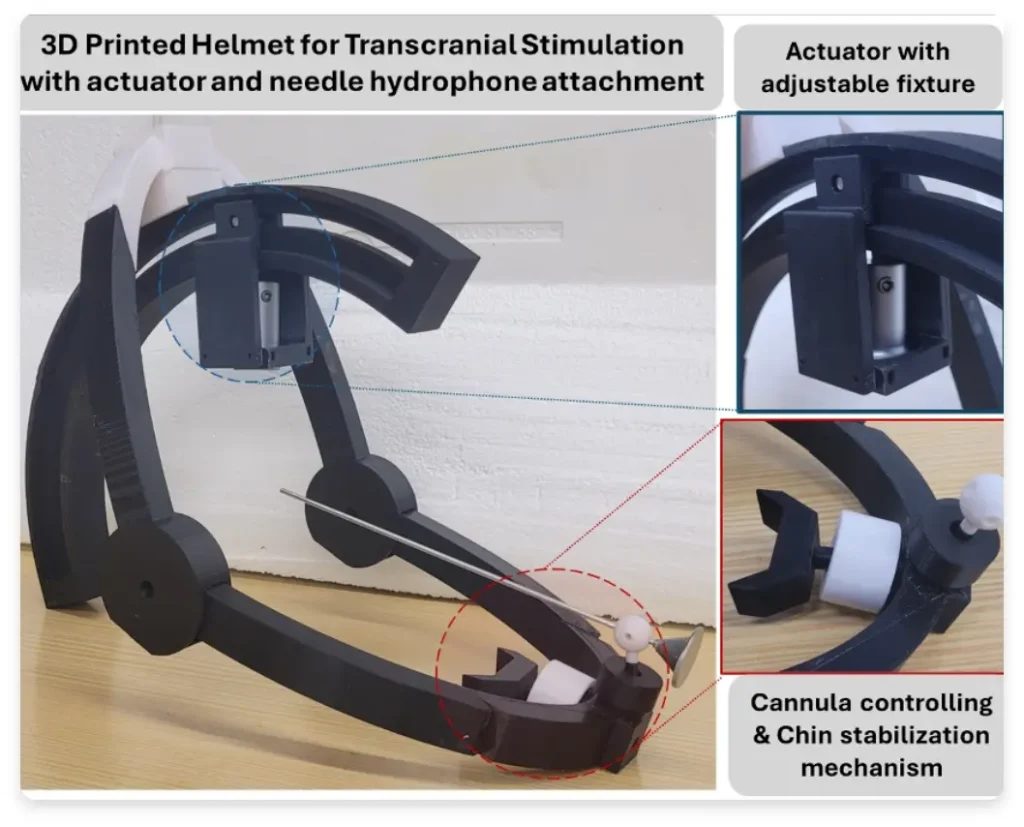
Fig. 22 — Development of a 3D printed Helmet for the ultrasound transcranial experimental test in the cadaveric models

Publications & Scientific Validation

Technological developments are documented through scientific publications, theses, and collaborative research projects, reinforcing transparency and reproducibility.

From Simulation to Application

By combining biomimetic material design, controlled fabrication processes, and systematic experimental characterization, the Materials pillar delivers reliable and reproducible testing environments for stimulation technologies.

Challenge us to develop tissue-mimicking materials tailored to your application.